
Arthroscopy of the Knee
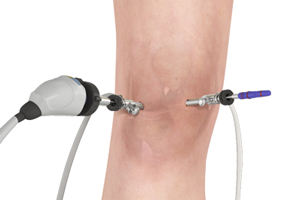
In some cases, Dr. Brighton may need to perform a procedure known as an arthroscopy. This surgical procedure can be used for:
- Diagnosis - to see clearly inside the joint
- Treatment - to affect a specific outcome
An arthroscope is a telescope that is inserted into the joint that includes a tiny camera which is connected to a screen used by Dr. Brighton to see inside your joint.
If necessary other surgical instruments can be inserted through the arthroscope or through additional small incisions. These other instruments are also required to perform cleaning, cutting or removal of material from the joint.
The term ‘arthroscope’ comes from two Greek words, arthro-, meaning joint, and -skopein, meaning to examine.
The benefits of arthroscopy include
- Smaller incisions
- Faster healing
- More rapid recovery, and
- Less scarring
Dr. Brighton can perform most arthroscopic surgical procedures on an outpatient basis. This means patients can return home the same day of the procedure.
How the Knee Works
To understand the functions, conditions, surgeries & procedures of the knee, Dr. Brighton has included an interactive animated presentation.
Risks with Knee Arthroscopy?
Complications are not common but can occur.
Prior to making any decision to have surgery, it is important that you understand the potential risks so that you can make an informed decision regarding the advantages and disadvantages of surgery.
The following list is by no means exhaustive, so it is important to discuss your concerns with Dr. Brighton.
General surgical risks include:
- Risk of infection
- Postoperative bleeding
- Clotting in the leg (deep vein thrombosis - DVT) or lung.
Apart from surgical risks, medical and anaesthetic complications can occur (including allergies), and these can affect your general well-being and health.